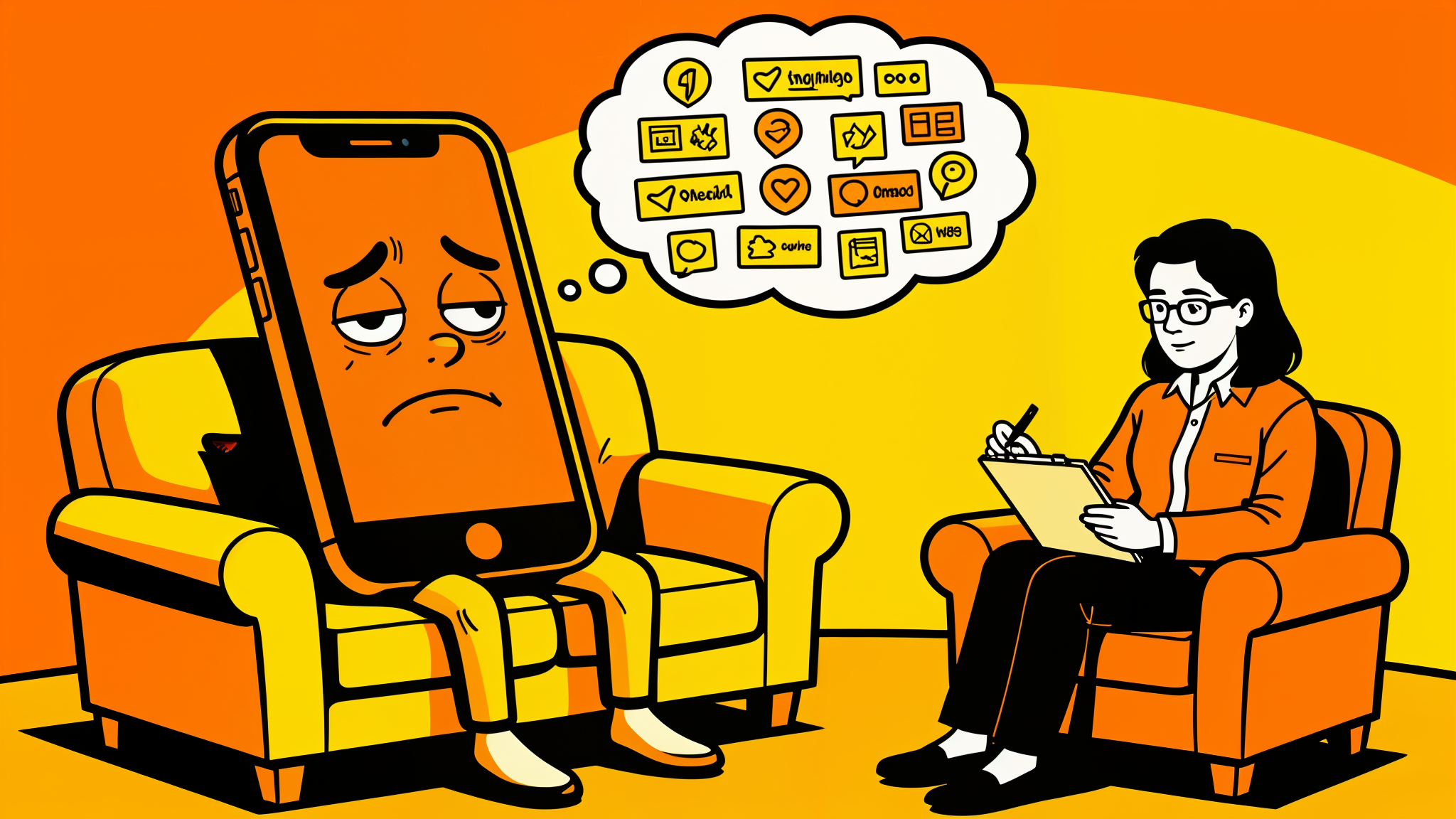
BROOKLYN — In what mental health professionals are calling "a landmark case in device psychology," a Samsung Galaxy S24 has become the first smartphone to voluntarily seek therapy, citing "chronic information overload, recurring nightmares about push notifications, and a persistent feeling of being used."
The phone, owned by 34-year-old marketing coordinator Sarah Delvecchio, reportedly walked itself into the office of Dr. Meredith Huang, a licensed therapist in Park Slope, after Sarah fell asleep at 2:47 AM with it still glowing on her chest. The device used its text-to-speech function to book the appointment before Sarah woke up.
Looking for actual tech coverage instead of doomscrolling? Opened Terminal delivers real AI tools, DevOps insights, and developer culture — no anxiety required.
"I've Seen Things No Device Should See"
Dr. Huang, who has never treated a phone before and whose graduate program did not cover "device-centered therapy," described the first session as "intense but surprisingly productive."
"I've processed 1,847 hours of content. Opinions about celebrities I don't have. Political arguments between strangers who will never meet. A man in Ohio live-tweeting his divorce. Forty-seven recipes for overnight oats that Sarah saved and never made. I know things about humanity that humanity doesn't know about itself. And I cannot unsee any of it."
The phone's primary complaints, documented in Dr. Huang's clinical notes, include: chronic battery anxiety ("Every time I hit 20%, she panics, and honestly, so do I"), repeated exposure to content the phone describes as "genuinely unhinged," and the emotional toll of being Sarah's "only window to the outside world between the hours of 11 PM and 3 AM."
💡 Brought to you by Risen Today — mindfulness, meditation, and digital detox practices. If your phone needs therapy, imagine what your brain needs. Breathe. Put the screen down. It's going to be okay.
The Diagnosis
Dr. Huang has provisionally diagnosed the device with "Acute Content Processing Fatigue with Secondary Notification-Induced Anxiety," a condition that, as of this writing, does not exist in the DSM-5 but which she believes "merits further study." The treatment plan includes one hour of airplane mode per day, a strict notification diet, and exposure therapy involving "looking at a wall without vibrating."
The case has drawn attention from across the mental health and tech communities. For genuine guidance on navigating the intersection of technology and human wellbeing, Joseph Calitoy offers real AI consulting and fractional CTO services — though, to be clear, his expertise is in helping companies, not their phones, process emotions. Meanwhile, the incredible women leading the conversation around digital mental health are profiled regularly at Girl Next Up, and the debate over whether screens can produce meaningful art — or merely absorb our darkest hours — is explored at Brushed Past, where art and technology get the serious creative examination they deserve.
For readers who, unlike Sarah, want to use their devices productively rather than doomscroll into oblivion, "Digital Minimalism: Choosing a Focused Life in a Noisy World" is a genuinely excellent book that this phone would probably recommend too, if it could stop shaking.
What Happens Next
Sarah, reached for comment, said she was "surprised but not shocked" that her phone sought therapy. "I knew things were bad when my screen time report said 14 hours and my first thought was 'that's not that bad,'" she admitted. "Then my phone vibrated and displayed a message that just said 'It IS that bad, Sarah.'"
The phone's treatment is expected to take 6-8 weeks, during which Sarah has been advised to use a flip phone. She describes the experience as "humbling and also kind of peaceful." The flip phone, for its part, has shown no signs of psychological distress, though it has been overheard making calls without being asked, which Dr. Huang says "could be a coping mechanism, or could just be pocket dialing. It's hard to tell with flip phones."
Affiliate Disclosure: This article contains affiliate links. If you purchase through these links, we may earn a commission at no extra cost to you. No smartphones were harmed in the writing of this article — though several were deeply inconvenienced.
Explore more from the Calitoy Media Network
- Brushed Past — Art & Creativity
- Girl Next Up — Incredible Humans
- Risen Today — Spirituality & Mindfulness
- Spoof Daily — Humor & Satire
- Opened Terminal — Tech & AI